
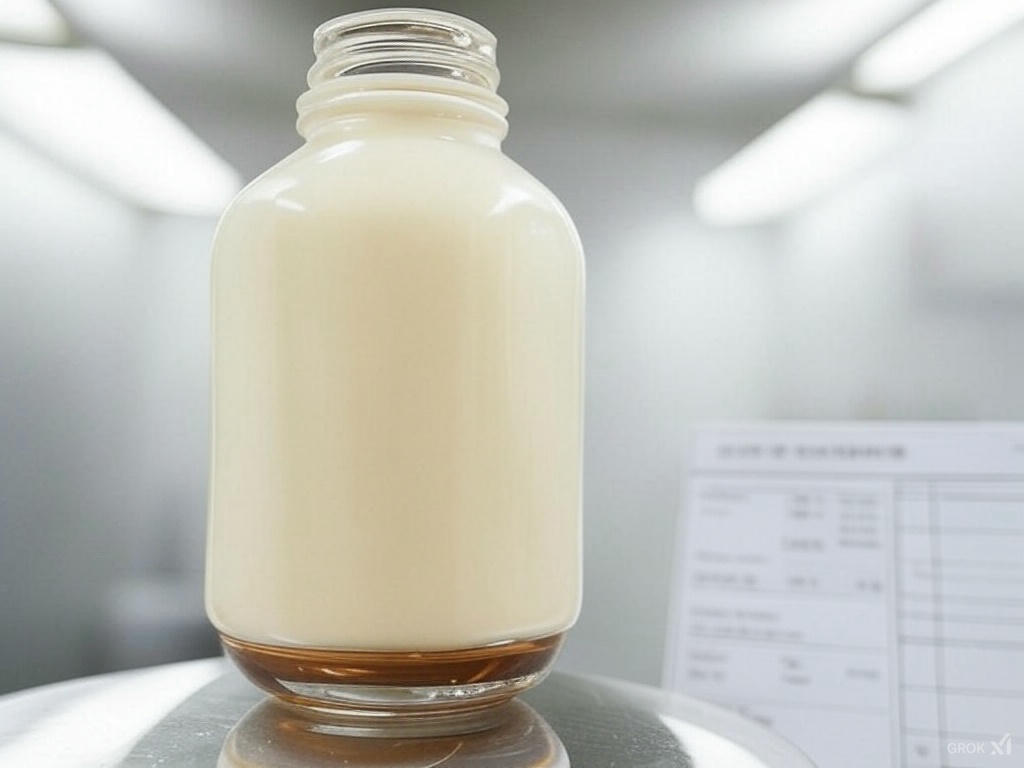
Product overview
Colloidal MCC (MCC gel) is microcrystalline cellulose co-processed with sodium CMC. It disperses in water to form a thixotropic gel that suspends particles and stabilises emulsions in food, pharmaceutical suspensions and personal care products.
Specification
| Property | Value |
|---|---|
| Appearance | White to off-white powder |
| MCC content | 81.0–91.0%, by grade |
| Sodium CMC content | 9.0–18.8%, by grade |
| Moisture | ≤ 6.0% |
| Ash | ≤ 2.0% |
| Particle size | 90% through 200 mesh |
| Viscosity | 50–200 mPa·s at 1.2–2.6% solids, by grade |
| pH, 1% dispersion | 6.0–8.0 |
| Heavy metals (Pb) | ≤ 10 mg/kg |
| Total aerobic count | ≤ 1,000 cfu/g |
| Yeasts and moulds | ≤ 100 cfu/g |
Values are from our current product data. Confirm the exact grade and limits with the TDS and the COA of the lot you test.
Applications
- Food and beverages: suspension in cocoa and protein drinks, stability in sauces and dairy
- Pharmaceutical: suspending agent in oral suspensions and nasal sprays
- Personal care: toothpaste, creams and lotions
Activating colloidal MCC
Colloidal MCC must be dispersed with enough shear to separate the microcrystals; the CMC then keeps them apart and a three-dimensional network forms. Under shear the network thins, so drinks pour and pump easily; at rest it rebuilds and holds cocoa, calcium or protein particles in suspension. Heat-stable, it keeps working through UHT and retort processes.
How to choose a grade
Choose CMC ratio and viscosity by the suspension you need; higher-CMC grades disperse more easily.
Packing and documents
25 kg multi-wall paper bags with an inner PE liner. Other packing is agreed per order. TDS, SDS and a representative COA are available for every grade, and each lot ships with its COA. Request documents or a sample.
Download (2026 revision): Technical data sheet (TDS, PDF) · Safety data sheet (SDS, PDF)
Related products
Related guides
FAQ
Does colloidal MCC need high shear?
Yes, it needs good dispersion to activate the gel network. Follow the dispersion method in the TDS.
What is the difference between MCC and colloidal MCC?
Standard MCC is a powder for tablets and bulking. Colloidal MCC is co-processed with CMC so it disperses into a stable gel network in water.
Which products use colloidal MCC?
Chocolate and protein drinks, plant-based milks, sauces, whipped toppings, oral suspensions and nasal sprays.