
A reference table of the typical physical and chemical properties of sodium carboxymethyl cellulose. Values for a specific grade are on its TDS; see our product pages for CMC food grade, CMC detergent grade and CMC oil drilling grade.
Property table
| Property | Typical value |
|---|---|
| Chemical name | Sodium carboxymethyl cellulose (cellulose carboxymethyl ether, sodium salt) |
| CAS number | 9004-32-4 |
| E number / INS | E466 / INS 466 |
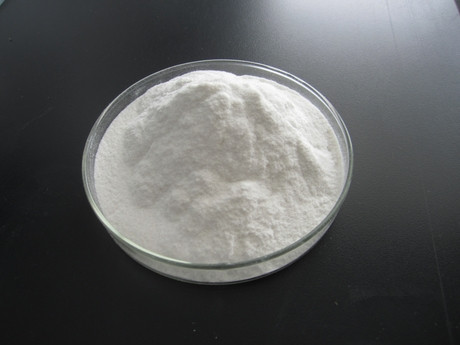
| Appearance | White to off-white powder or granules; odourless and tasteless |
| Degree of substitution | 0.4–1.5 (commercial grades mostly 0.6–1.0) |
| Viscosity | About 5 mPa·s (2%) up to several thousand mPa·s (1%), by grade |
| pH (1% solution) | 6.0–8.5 for refined grades |
| Solubility | Soluble in cold and hot water; insoluble in ethanol, acetone and most organic solvents |
| Bulk density | About 0.4–0.8 g/cm³, depending on particle form |
| Hygroscopicity | Absorbs moisture from humid air; store dry |
| Thermal behaviour | Does not melt; browns at about 225 °C and chars at about 250 °C |
| Charge | Anionic polyelectrolyte |
Properties that change with grade
Degree of substitution controls solubility, clarity and tolerance of salt and acid. Chain length controls viscosity. Purity (CMC content, salt and glycolate) decides whether a grade can be used in food or pharmaceuticals; food grades meet the JECFA/E466 limits, including sodium chloride ≤ 0.5% on the dry basis.
Safety status
JECFA has assigned modified celluloses, including CMC, an ADI “not specified”. CMC is listed in the US, EU and Chinese food additive regulations and in major pharmacopoeias (as carmellose sodium).
FAQ
Is CMC soluble in ethanol?
No. CMC dissolves in water but not in ethanol; ethanol is used to wash and precipitate it during purification.
What is the melting point of CMC?
CMC does not melt. It decomposes on heating, browning at about 225 °C and charring at about 250 °C.
What is carmellose sodium?
Carmellose sodium is the pharmacopoeia name for sodium carboxymethyl cellulose.