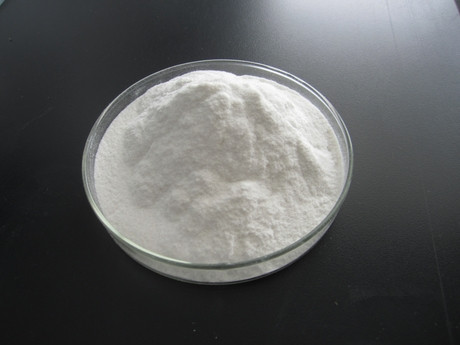
Sodium carboxymethyl cellulose (sodium CMC) is produced from purified cellulose in a few controlled steps. How each step is run decides the degree of substitution, the viscosity and the purity of the final grade.
1. Raw material
Production starts from refined cotton linters or wood pulp. Cotton linters give long chains for high-viscosity grades; wood pulp is common for low and medium viscosity.
2. Alkalisation
The cellulose is treated with sodium hydroxide, usually in a water/ethanol or water/isopropanol medium. This swells the fibres and forms alkali cellulose, which can react evenly. Temperature and time here influence chain length and therefore viscosity.
3. Etherification
Monochloroacetic acid (or its sodium salt) is added. It reacts with the alkali cellulose and attaches carboxymethyl groups to the chain. The ratio of reagent to cellulose sets the degree of substitution. Side reactions produce sodium chloride and sodium glycolate.
4. Neutralisation and purification
The crude product is neutralised. For technical grades it may be dried directly, so the salts stay in the product. For refined grades it is washed with aqueous alcohol to remove salts and glycolate until CMC content reaches 98% or more.
5. Drying, milling and sieving
The product is dried, milled and sieved to the particle size the application needs: fine powder, granules or instant-dispersing grades.
| Process choice | Effect on the product |
|---|---|
| Cotton linters vs wood pulp | Higher vs lower maximum viscosity |
| Reagent ratio | Degree of substitution |
| Alkalisation conditions | Chain length and viscosity |
| Washing | Purity: technical (50–90%) or refined (≥98%) |
| Milling and sieving | Particle size and dissolution speed |
Which grade for which use
Refined grades go into food (CMC food grade), toothpaste and pharmaceuticals. Technical grades serve detergents (CMC detergent grade), drilling fluids (CMC oil drilling grade), ceramics (CMC ceramics grade), textiles (CMC textile grade) and construction (CMC construction grade).
FAQ
Why does technical-grade CMC contain salt?
Sodium chloride and sodium glycolate are by-products of the reaction. Technical grades are not washed, which keeps cost down where salt is acceptable.
How is the degree of substitution controlled?
Mainly by the ratio of monochloroacetic acid to cellulose and by reaction efficiency.
What is sodium CMC used for?
As a thickener, stabiliser, water-retention agent, binder and film former in food, detergents, drilling fluids, paper, textiles, ceramics and construction.